
Moisture Damage Flooring Repair: Invisible Restoration for Property Sale
Clients:
Homeowner preparing for sale
Category:
Floor, Moisture Damage Repair, Residential Sale Prep
Services:
Timber Stain Removal, Floor Restoration, Colour Matching
Date:
03/12/2025
Selling the Dream: Eliminating Invisible Flaws
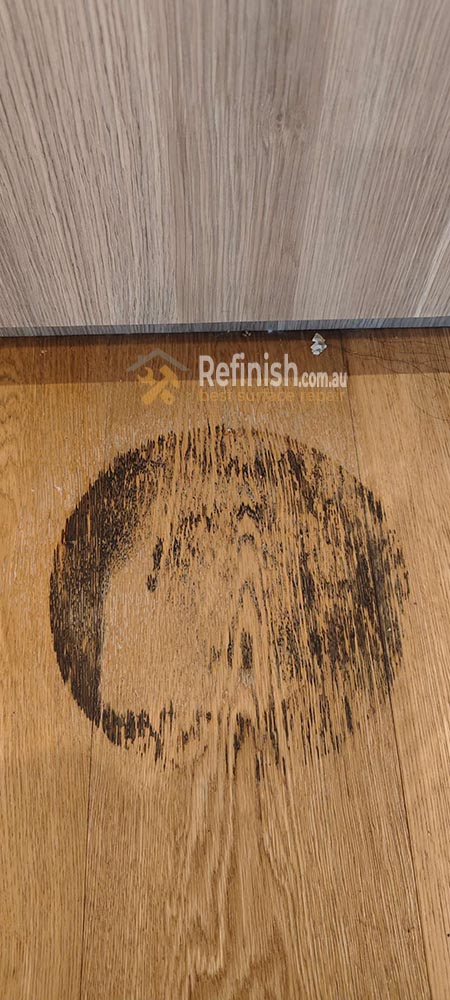
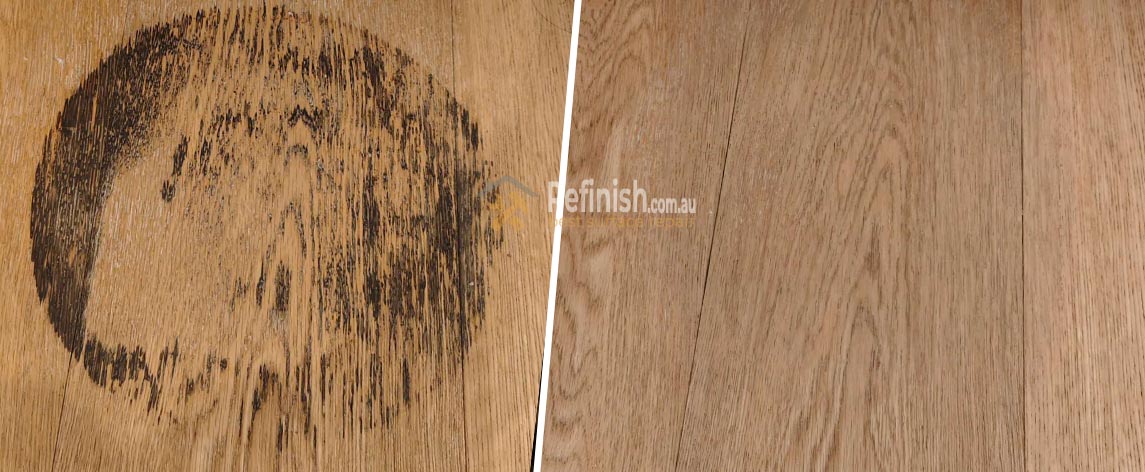
The homeowner contacted us urgently as they were listing their property for sale. They discovered a severe, dark circular stain where a large indoor plant pot had sat for years. The mould and moisture had penetrated deep into the timber.
This flaw was a deal-breaker for potential buyers and was too large to conceal. The client required a permanent, invisible repair, as sanding and refinishing the entire house was far too costly and time-consuming for the sale schedule.
Key Challenges: Deep Penetration & Perfect Blend
The dark, circular stain was the result of prolonged moisture and mould growth, causing deep discoloration. The main difficulty was removing the stain's residue without damaging the surrounding, healthy timber.
- Deep penetration of moisture and mould discoloration into the wood fibres.
- Achieving a perfect blend of tone and finish to match the aged surrounding floor.
- Ensuring the repair area is completely undetectable to prospective buyers and inspectors.
Our Stain Neutralisation and Restoration Process
We first stabilized the affected area by applying a targeted neutralizer to stop any residual mould activity.
The discoloured wood was then gently treated to lift the deep stain without damaging the texture.
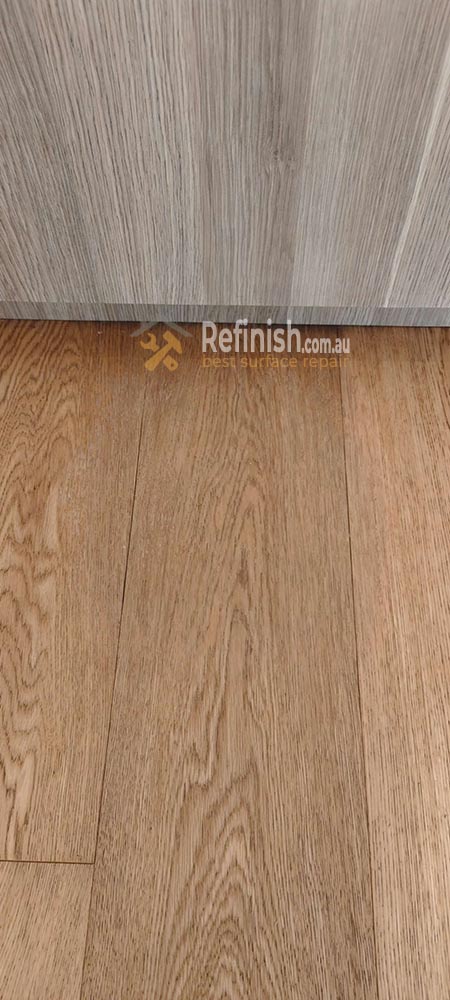
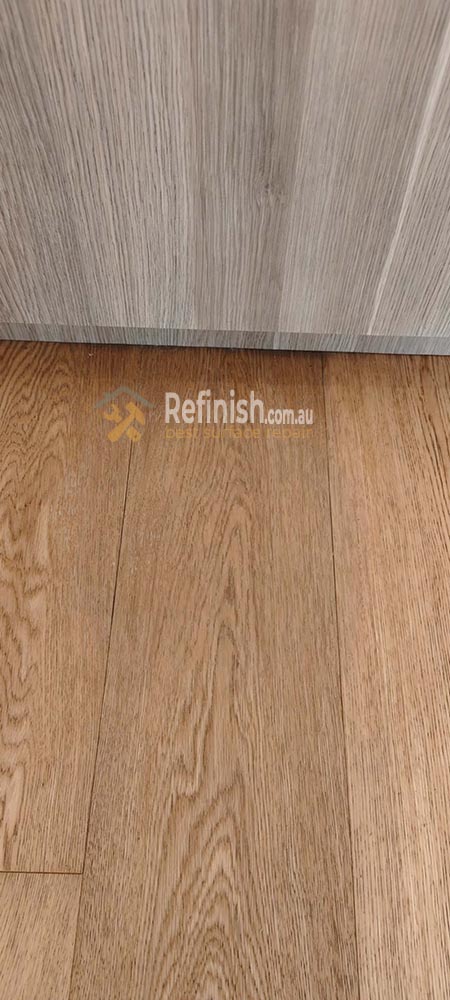
Using a multi-stage tinting process, we meticulously hand-matched the original wood colour and grain pattern.
A final sealant was applied to ensure durability and a uniform sheen, resulting in a floor that was flawless for property viewings.
The homeowner had lived with the stain for months before deciding to sell. At first they assumed it would be something a cleaner could handle. It wasn’t — the moisture from the plant pot had sat long enough to drive mould deep into the timber fibres, leaving a dark circular mark about thirty centimetres across that no surface product could touch.
With the property listed and the first open home two weeks away, there was no time for sanding and refinishing the entire floor. That process would have meant moving all furniture, waiting for coats to cure, and living out of the house for several days. We were asked whether a localised repair was possible. It was.
The trickiest part of this job was the floor’s age. The surrounding boards had developed a warm amber tone that a fresh stain would never replicate straight from a tin. We built the colour in stages, glazing over several passes until the repaired area matched the patina of the rest of the floor. The homeowner confirmed the stain was undetectable during every subsequent inspection and the property sold without the issue being raised.